Majors
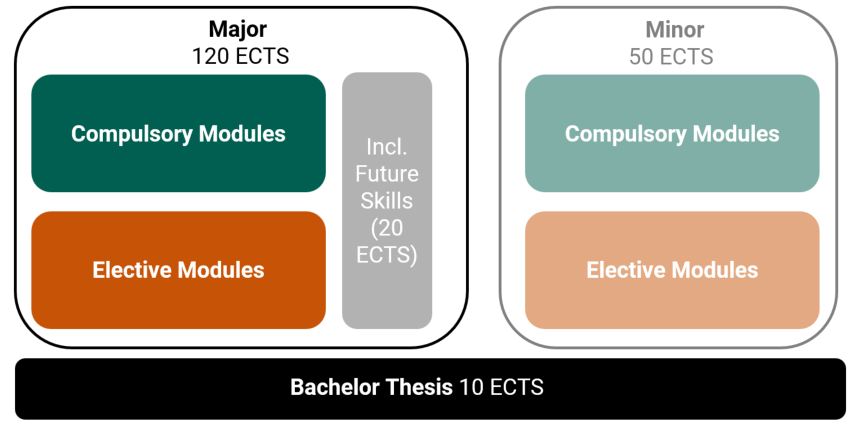
There are seven majors to choose from:
The major in Critical Media Design is offered by the Institute for Media Research of the Faculty of Humanities of the Chemnitz University of Technology.
The Critical Media Design major provides a sound understanding of how analogue, digital and technical media can be understood and designed as spaces for communication and interaction. The focus is on the conception, prototyping and evaluation of digital media offerings and socio-technical systems, particularly in the contexts of human-computer interaction, digitalised learning, and platform and communication design. The programme follows a user-centred approach and combines academic rigour with creative and development-oriented work.
In terms of content, the major covers areas such as human-technology systems, learning and learning with media, communication and media sociology, visual sociology, image data analysis, virtual reality and instructional design. In addition, there are specialisations in areas such as immersive media, media aesthetics, accessibility of digital media, multimedia and interactive learning media, social media and visual media cultures. Students learn to identify user requirements and interaction dynamics, translate these into communication and design concepts, and develop and test digital applications through iterative processes.
In their professional practice, graduates can use this knowledge to conceive, design and evaluate digital media offerings, learning environments, platforms and interactive applications. Areas of application include the media and creative industries, product and concept development, the field of UX, instructional and communication design, as well as media and project management in business, education, culture and academia.
The major subject Critical Media Design can be combined with the following minor subjects:
- Anglophone Area Studies
- Adult and Further Education
- Computer Science
- Digital Humanities and Cultural Semiotics
- English Linguistics
- English Literatures and Cultures
- English Studies
- European Studies
- German Studies
- Medieval Studies
- Non-formal Education in Childhood and Adolescence
- Political Science
- Sociology
- Statistics
You can find further information about the major on this website.
The major in English Studies is offered by the English Department of the Faculty of Humanities of the Chemnitz University of Technology.
The major subject of English Studies at Chemnitz University of Technology is a component of the degree programme in English and American Studies. With one professorship each for the three sub-disciplines of literature, linguistics and Anglophone Area Studies, the department covers the full breadth of the discipline and its sub-disciplines. Furthermore, the professorships have specific areas of specialisation and expertise, each of which can be regarded as a unique selling point. For instance, teaching in literary studies complements the traditional examination of the canon of English-language literature with a focus on postcolonial cultural and literary representations and practices. In the field of linguistics, the major offers a specialised focus on digital linguistics. Unlike almost all other chairs at German universities in this field, Anglophone Area Studies has an explicitly social science orientation and is decidedly comparative in nature (i.e. not exclusively focused on British or American culture).
A key feature of the major is its strong practical focus. Students acquire career-relevant skills in areas such as editing and publishing, project management and translation. In addition, numerous partnerships with cultural and media organisations provide practical insights and initial work experience.
The English Studies major can be combined with the following minor subjects:
- Adult and Further Education
- Critical Media Design
- Computer Science
- Digital Humanities und Cultural Semiotics
- European Studies
- German Studies
- Media Use Effects
- Medieval Studies
- Non-formal Education in Childhood and Adolescence
- Political Science
- Sociology
- Statistics
You can find further information about the major on this website.
The major in Educational Studies is offered by the Institute of Education of the Faculty of Humanities of the Chemnitz University of Technology.
The major subject offers a comprehensive and in-depth academic and practice-oriented course of study. The acquisition of broad and in-depth knowledge of educational science and pedagogy is balanced against the teaching of knowledge and skills in selected, socially relevant areas of educational practice.
In addition to a generalist core curriculum, the programme structure offers students a wide range of compulsory elective options at various stages of their studies and skills development. This enables them to discover their own career-oriented, education-focused skills profile across both traditional and emerging areas of educational practice, and to shape and develop this profile in conjunction with a minor subject. The selection of subject-specific content and topics is tailored to current societal challenges in upbringing, education, socialisation and support.
When combined with a minor subject, the major subject leads to an initial professionally qualifying degree which opens up career prospects, particularly in extracurricular or non-school educational fields, and is ideally suited to the increasingly interdisciplinary challenges faced, for example, in
- child and youth work and support
- work with immigrants and refugees
- youth career support and vocational socialisation
- the diverse needs for further and retraining in the context of lifelong learning or during transitions and disruptions in working life
, whilst taking current social issues (e.g. digitalisation, migration or sustainability) into account. The specialist and methodological skills acquired thus provide an ideal foundation for educational work within multi-professional teams.
In combination with the chosen minor subject, the major subject provides future graduates with the necessary foundations for a career start tailored to their individual needs, whilst also laying the groundwork for further or higher qualifications within the framework of specialised or general Master’s programmes in education (e.g. the Master’s programme in Educational Science at Chemnitz University of Technology).
The major can be combined with all minor subjects offered as part of the combined Bachelor’s programme. The exceptions to this are the minor subjects ‘Extracurricular Education for Children and Young People’ and ‘Adult and Continuing Education’.
The major in Educational Science can be combined with the following minor subjects:
- Anglophone Area Studies
- Critical Media Design
- Computer Science
- Digital Humanities and Cultural Semiotics
- English Linguistics
- English Literatures and Cultures
- English Studies
- European Studies
- German Studies
- Media Use & Effects
- Medieval Studies
- Political Science
- Sociology
- Statistics
You can find further information about the major on this website.
The major in German Studies is offered by the Institut for German Studies and Intercultural Communication of the Faculty of Humanities of the Chemnitz University of Technology.
Anyone with a passion for language and literature will find an exceptionally broad foundation here: unlike many similar degree programmes, which focus on either linguistics or literary studies, the major in Chemnitz treats all four sub-disciplines of German studies as equally important and combines theoretical depth with a strong practical focus.
Modern German and Comparative Literature explores German-language literature from the 17th century to the present day within a European context and in dialogue with other arts and media. The History of German Literature and Language in the Middle Ages and Early Modern Period offers an insight into 800 years of literary and cultural history, trains students in the analysis of historical language stages, and simultaneously explores how the Middle Ages continue to influence contemporary culture, film and computer games. German Linguistics explores the German language beyond core topics of linguistic structure to include text types, conversation and the interplay of language, image and gesture – from advertisements and social media to face-to-face interaction. Finally, German as a Foreign and Second Language examines the German language from an external perspective and combines linguistic analysis, empirical research into second language acquisition and language teaching methodology.
Across all subject areas, students learn to analyse texts precisely, to write in a manner appropriate to their audience, to convey complex content in an accessible way, and to conduct empirical research – including using digital methods. Work placements, field trips and modern presentation formats such as science slams, TED Talks and podcasts strengthen the link to professional practice.
Graduates are in demand as experts in text, communication, literature and culture: in publishing houses, editorial offices and media organisations; in PR, advertising and corporate communications; in cultural institutions, museums and theatres; in adult and continuing education; in the field of German as a foreign language; in cultural management; and in research and academia.
The major in German Studies can be combined with the following minor subjects:
- Adult and Further Education
- Anglophone Area Studies
- Critical Media Design
- Computer Science
- Digital Humanities and Cultural Semiotics
- English Linguistics
- English Literatures and Cultures
- English Studies
- European Studies
- Media Use & Effects
- Non-formal Education in Childhood and Adolescence
- Political Science
- Sociology
- Statistics
You can find further information about the major on this website.
The major in Computer Science is offered by the Faculty of Computer Science of the Chemnitz University of Technology.
Nowadays, no field of study or company can manage without IT solutions. In this degree programme, the main subject of Computer Science is combined with a non-IT minor. The basic idea is that, by acquiring IT skills, Bachelor’s students can create individual synergies with the skills they gain from their minor. The study profile for Computer Science as a major subject largely corresponds to a traditional Bachelor’s degree in Computer Science, with slightly more limited options and a less in-depth focus on the area of Technical Computer Science/Embedded Systems.
The major subject of Computer Science can be combined with the following minor subjects:
- Adult and Further Education
- Anglophone Area Studies
- Critical Media Design
- Digital Humanities and Cultural Semiotics
- English Linguistics
- English Literatures and Cultures
- English Studies
- European Studies
- German Studies
- Media Use & Effects
- Medieval Studies
- Non-formal Education in Childhood and Adolescence
- Political Science
- Sociology
- Statistics
You can find further information about the major on this website.
The major in Media Use & Effects is offered by the Institute for Media Research of the Faculty of Humanities of the Chemnitz University of Technology.
The major subject ‘Media Use & Effects’ provides a sound academic understanding of the role that media play in everyday private and professional life, in interpersonal relationships and in social developments. The focus is primarily on processes at the individual and group levels, such as the influence of media on well-being, learning outcomes and everyday communication. At the same time, the major also addresses key phenomena at the macro-social level, such as the formation of public opinion, agenda setting, the emergence of mainstream culture and societal trends in media use. Throughout, the programme centres on a reflective examination of the opportunities and risks associated with media.
In terms of content, the major covers key areas such as strategic communication, health communication, entertainment psychology, social media, mobile communication, media and society, children and media, media literacy, accessibility of digital media, visual media cultures, and multimedia and interactive learning media. This enables students to acquire in-depth knowledge of various communication contexts, media formats and socially relevant fields of application.
In their professional careers, graduates can use this knowledge to analyse, evaluate and help shape media offerings, communication processes and digital applications in a way that is tailored to specific target groups. Potential career paths include media and communication professions, research and consultancy, the education sector, and the development and evaluation of digital offerings.
The major subject Media Use & Effects can be combined with the following minor subjects:
- Anglophone Area Studies
- Adult and Further Education
- Computer Science
- Digital Humanities and Cultural Semiotics
- English Linguistics
- English Literatures and Cultures
- English Studies
- European Studies
- German Studies
- Medieval Studies
- Non-formal Education in Childhood and Adolescence
- Political Science
- Sociology
- Statistics
You can find further information about the major on this website.
The major in Political Science is offered by the Institute of Political Science of the Faculty of Humanities of the Chemnitz University of Technology.
The major subject covers the core areas of a basic education in political science: political theory and the history of ideas, policy analysis, electoral and attitude research, international relations, the comparison of political systems, and governance in multi-level systems. Students acquire sound methodological skills in quantitative and qualitative methods and learn to analyse complex political contexts clearly and communicate them in an accessible manner.
This foundation opens up a wide range of career paths: in government departments and political consultancy firms, you will work on evidence-based strategies and policy concepts. Within political parties and parliaments, you will take on roles in analysis, communication and campaigning. Universities and think tanks offer opportunities for in-depth research and teaching. In international organisations and NGOs, you will contribute to programmes promoting democracy, conflict resolution and development cooperation. The media, public relations and data journalism are also attractive fields for making political issues accessible to a wide audience. Furthermore, graduates are in demand in companies and consultancy firms – for example, in public affairs, risk management and corporate communications – as well as in public administration, where they help to implement and evaluate policy.
The degree programme combines academic foundations with practical experience: practical projects, guest lectures and work placements help students transition into professional life and encourage them to build a network. Anyone who combines an interest in politics with analytical thinking and wishes to help shape social developments will find a solid foundation and a wide range of prospects here.
The main subject of Political Science can be combined with the following minor subjects:
- Adul and Further Education
- Anglophone Area Studies
- Critical Media Design
- Computer Science
- Digital Humanities and Cultural Semiotics
- English Linguistics
- English Literatures and Cultures
- English Studies
- European Studies
- German Studies
- Media Use & Effects
- Medieval Studies
- Non-formal Education in Childhood and Adolescence
- Sociology
- Statistics
You can find further information about the major on this website.